Translate

jueves, 28 de marzo de 2013

Literature, poetry and philosophy in England


The period of Old English literature was always backed by the epic poem Beowulf, the secular prose of the Anglo-Saxon Chronicle is, along with Christian writings Judith, Caedmon's Hymn and hagiographies holy. After the Norman conquest Latin continued amongst the educated classes, as well as an Anglo-Norman literature. English literature emerged with Geoffrey Chaucer, author of The Canterbury Tales, along with Gower, the Pearl Poet and Langland. The Franciscans, William of Ockham and Roger Bacon were major philosophers of the Middle Ages and the other ages. Julian of Norwich it was with her Revelations of Divine. Love was a prominent Christian mystic. During the Renaissance, William Shakespeare was the great exponent, with works such as Hamlet, Romeo and Juliet, Macbeth and The Dream of a Summer Night, it remains one of the most championed authors in English literature. Marlowe, Spenser, Sydney, Thomas Kyd, John Donne, Jonson are other established authors of the Elizabethan age. Francis Bacon and Thomas Hobbes wrote on empiricism and materialism, including scientific method and social contract. Robert Filmer wrote about the divine right of kings. Andrew Marvell was the best known poet of the Community, while John Milton authored Paradise Lost during the Restoration it was.
Some of the most prominent philosophers of the Enlightenment were Locke, Paine, Johnson and Bentham. More radical elements were later countered by Edmund Burke who is regarded as the founder of conservatism. The poet Alexander Pope with his satirical verses, became well regarded. The English performance is a significant role in romanticism, Coleridge, Byron, Keats, Shelley, Shelley, Blake and Wordsworth were major figures. In response to the Industrial Revolution, the writers seemed to find a way between liberty and tradition; Cobbett, Chesterton and Belloc were main exponents Penty and cooperative movement advocate Cole. Empiricism continued through Mill and Russell, while Williams was involved in the analysis. The authors of the era of the Victorian era include Dickens, the Brontë sisters, Jane Austen, Eliot, Kipling, Hardy, H. G. Wells, Lewis Carroll and Evelyn Underhill. Since then England continued to produce novelists such as C. S. Lewis, Orwell, D. H. Lawrence, Virginia Woolf, Enid Blyton, Huxley, Christie, Pratchett, J. R. R. Tolkien, and J. K. Rowling.

sábado, 16 de marzo de 2013

Thirteen bodies are discovered at the time of the Black Death


Excavations of a rail project have enabled the discovery in London of thirteen bodies and remains of pottery dating from the mid-fourteenth century and which seem to belong to the time of the Black Death. It was already known that in that area there was a cemetery but its exact location was a mystery.
The skeletons were found in Charterhouse Square Square, along with ceramic mid-fourteenth century, during excavations as part of the Crossrail project, the new line of high-speed subway linking the districts of East and West London.
DNA tests to be conducted on human remains could provide valuable information about the development of the bacteria that caused the Black Death call or Black Death, the most devastating plague in human history that affected Europe in the nineteenth XIV and peaked between 1347 and 1353.
During the excavation works teams have discovered skeletons near London's Liverpool Street (north of town), remains of the Bronze Age and the largest piece of amber found in the UK.
"We have found archaeological remains practically all periods, from prehistory to the twentieth century, but this location is probably the most important medieval site of those found," said Jay Carver, the rail project archaeologist.
The bodies were distributed in two rows, before the black plague became epidemic causing mass graves. Archaeologists working on the Crossrail project and others from the Museum of London will continue digging to discover more remains or other findings.
The Crossrail project is presented as the most ambitious in Europe and also includes the construction of two large tunnels 30 meters below the surface. If all goes as planned, the project of uniting over 118 km the towns of Maidenhead, west of London, in the county of Berkshire, with Shenfield (Essex), to the east, will be completed in 2017 . The Crossrail will operate up to 24 trains at peak times, each traveling at speeds up to 160 km / h.

miércoles, 13 de marzo de 2013

A Van Dyck is discovered stored in an English museum


A passionate British art has identified a valuable online see Van Dyck was stored for years in an English museum because they thought it was a copy.
The art historian Bendor Grosvenor authorship certified female portrait, 72 by 61 inches, after seeing it on the website "Your paintings" enabled by public broadcaster BBC to catalog all the oils in the hands of public institutions in the UK.
A Grosvenor not had no doubt that the portrait of Olivia Boteler Porter, bridesmaid Henrietta Maria, wife of King Charles I, was the Flemish painter Anthony Van Dyck, who worked at the court of the monarch.
The work, in the 1630s, remained for years forgotten and dusty Bowes Museum in County Durham English because it was believed to be a copy.
Grosvenor has valued the portrait, which will continue in public hands, around one million pounds (1.1 million euros or 1.5 million), compared to the four or five thousand pounds (four thousand to five thousand 588 euros or 735 995 five thousand to seven thousand 493 U.S. dollars) worth is estimated as the alleged copy.
The picture identification process detailed in the BBC program "Culture Show", which will air today and the Bowes Museum director, Adrian Jenkins, thanks Grosvenor to have increased the pedigree of his collection.

martes, 12 de marzo de 2013

A Incredible Treasure


Terry Herbert, an amateur search for objects with metal detector, never imagined that his hobby would take to the pages of the newspapers. However, last July Herbert discovered on the farm of some friends in Burntwood (Staffordshire, UK) which is considered as the largest Anglo-Saxon treasure discovered so far. According to experts, the pieces discovered (more than 1,500 gold and silver) are older than about 1,300 years, and are delicately worked. The beautiful jewelry totaling five gold and 1.3 kilograms of silver.
"The quantity of gold is amazing but, more importantly, the quality of craftsmanship is really high," said Kevin Leahym, Portable Antiquities Scheme member, a group that records archaeological finds made ​​by 'treasure hunters' amateurs in UK. It was not the only expert in making statements about the importance of this discovery. In the words of Leslie Webster, a researcher at the British Museum, "[the discovery] is going to alter our perceptions of Anglo-Saxon England in the seventh century and early VIII as radically, if not more, as the Sutton Hoo discoveries in 1939; force archaeologists and art historians to rethink the chronology of the manuscripts and metalwork.


miércoles, 6 de marzo de 2013

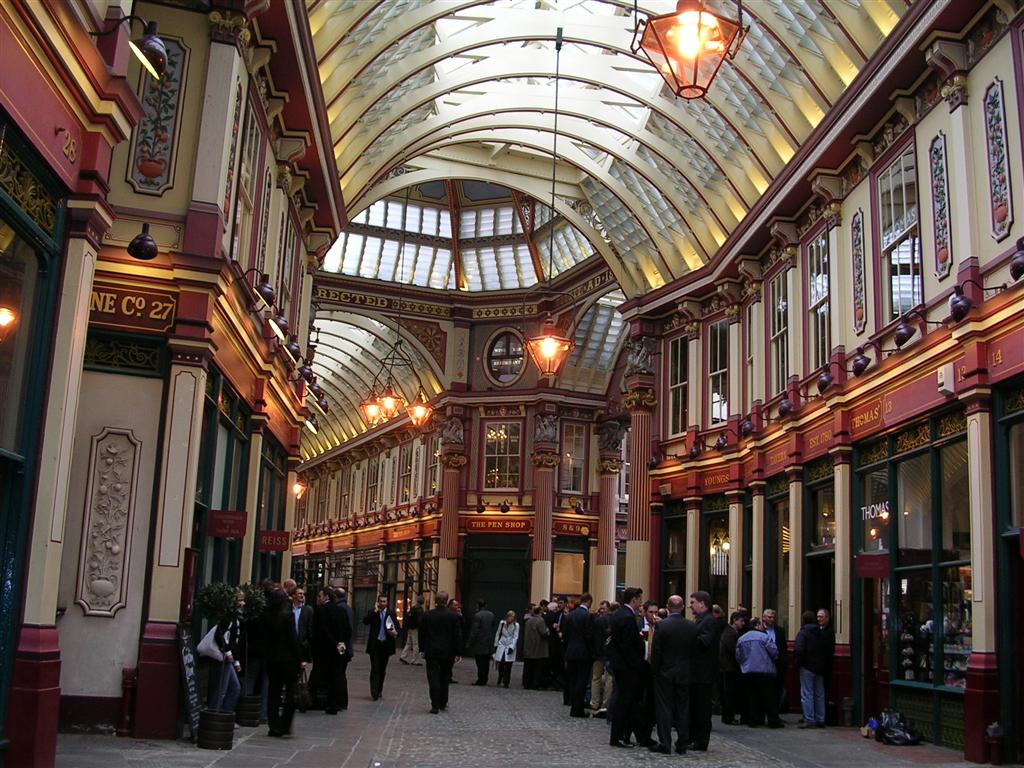
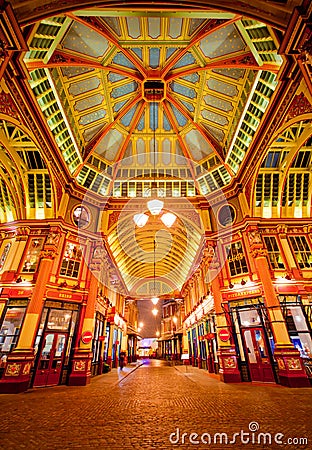
Leadenhall Market


This market is located in the epicenter of London's financial district just steps from the subway station Bank. The environment is certainly attractive, the floor is made of cobblestones, the area is covered by a glass roof and wrought iron along with the decor of the shops and pubs of the street give an air of another time. In fact the outdoor market have been used in various films like Harry Potter and the Sorcerer's Stone.
The market dates back to the 14th century although the current design, really spectacular, dating from 1881. It sold, chiefly, fresh foods, such as meats and cheeses, but there are florists, cafes and pubs.

martes, 19 de febrero de 2013

The celts


Origin

The most accepted theory of the origin of the Celts, is the "Indo-European". From India and the Middle East, migrated to Europe. However, some studies suggest other possible different origins of the Celtic people.

Celtic culture

Celtic culture comprises orally transmitted traditions, highlighting the stories included in the Ulster Cycle.
The dress of the Celts, as has been rebuilt, shows a colorful style and well decorated, with great tendency to mix bold colors. The main dyes that caused so fervently surely were: for red, the "Red" for Reseda luteola yellow and blue, pastel grass. The linen fabric was the oldest found, used by proto-Celts. The wool became the main raw material used once the sheep were domesticated. In the Iron Age most clothing was made of wool Celts. The fabric was woven with looms, plaid and stripes. The pieces were braccae basic dress for men and long gowns for women peplum and a bag on the belt for both.
The houses were made of armor studs, intertwined branches and twigs and mud, straw cubiertasd of entramdos. Holes distributed around the house, were used to store grain. The homes were within fortified hill, as in the case of Maiden, in Dorset.

Religion


The religion of the ancient Celts, particularly that of the Gauls before the Roman conquest, is not well known, and the data they have to rebuild it are scarce and not very accurate.
The cult was in charge of the "Druids", priests who were both educators of youth. The monuments called "Druid Stone", before the arrival of the Celts west of Europe, seem to have shown no role in the religion of the ancient Gauls.
For a long time there were only local cults especially related to mountains, forests and waters, who was invoked under different names.
The Gauls were too abstract deities or spirits of the cities.
Among the practices of popular belief is famous collection, according to fixed prescriptions, mistletoe, which is endowed with extraordinary virtues considered. Also, the oak was considered a sacred tree.

lunes, 11 de febrero de 2013

New's Wembley Stadium(2007-2013)

The Wembley Stadium is a football stadium that is located on the former site of the stadium with the same name. The Old Wembley Stadium was the most famous of all England and one of the best known worldwide. The new Wembley stadium is the local football team England.
After the demolition in 2002 of the old Wembley and the design of architect Norman Foster opened the door to a new Superestadio with a capacity of 90,000 spectators, which was completed in 2007. The project cost was around 757 million pounds (1.097 billion euros).
The stadium is connected to the metro stations of Wembley Park and Wembley Central via "White Horse Bridge".
The construction of the new Wembley was part of the project for the London 2012 Olympics, which hosted football matches both male and female and both finals.
It was expected that the national stadium was inaugurated on 13 May 2006 with the end of the FA Cup, but due to problems with the construction companies and WNSL Multiprex, set a new deadline for September 2006, with the first match qualification for Euro 2008, which was to face England against Andorra. However, again it had to delay the opening until 2007.On March 24 of that year the stadium was finally opened inmatch between the U-21 England and Italy
The stadium holds the match for the final of the FA Cup, the Community Shield and Carling Cup and the matches of the England football team.
On May 28, 2011 hosted the final of the Champions League between FC Barcelona and Manchester United, the first being winning by 3 goals to 1. In June 2011 the UEFA appointed Wembley again host the final of the Champions League in 2013, on the anniversary of the Football Association.
On August 11, 2012, the court Wembley hosted the game for the gold medal in the 2012 Olympic Games, held between teams from Brazil and Mexico, which was won by the Aztec squad by a score of two goals one.
He has received the first NFL game outside of the Americas in 2007, within the series of events called "NFL International Series", in a regular season game between the Miami Dolphins (which made local computer), and the New York Giants, who months later would proclaim champions of Super Bowl XLII.
On October 26, 2008, due to the success of the previous year, returned to play another regular season game, in this case pitting the New Orleans Saints (at home) against the San Diego Chargers.
Repeated in 2009, also facing regular season game to the Tampa Bay Buccaneers (at home) and New England Patriots (as visitors).
In 2010 they played the match between Denver Broncos and San Francisco 49ers San Francisco 49ers where imposed by a score of 24-16.


martes, 5 de febrero de 2013

The Hundred Years War


The Hundred Years War was an armed conflict that lasted in reality 116 years (1337-1453) between the kingdoms of France and England. This war was feudal roots, as its purpose was none other than settle who would control the vast possessions of the English monarchs in French territories since 1154, due to the accession of Henry II Plantagenet, Count of Anjou and married to Eleanor of Aquitaine, the throne English. Had international implications. Finally, after countless avatars, resulted in the removal English French lands.

Origins of the conflict
The huge rivalry between France and England had already begun at the time of the Battle of Hastings, in which the French Duke William of Normandy (William the Conqueror or William the Bastard) from seizing England (1066). Now the Normans were kings of a great nation, and would require the French king to be treated as such. But the point of view of France was not the same. The Dukes of Normandy had always been his vassals, and that had risen from his duchy to a high throne in a country "far" did not have to change their traditional subservience to the crown of Paris.

The war
Among the children of Philip the Fair was Elizabeth, who was the mother of Edward III of England. The young king, of only sixteen years, tried to claim his right to the throne of France by appealing to this. if the host had English thesis, the daughters of Louis X, Philip V and Charles IV would have more right to pass the crown over his aunt Elizabeth of France.
Of course, France disagreed therefore invoked the Salic Law, which forbade the transmission of the crown through the female line, and therefore decided that the newly abandoned crown passed to the Capetian younger brother of Philip the Fair: Charles of Valois. But this was 1328, and Charles had died three years earlier. Thus, the theory corresponded French crown to his son, Philip of Valois, under the real name of Philip VI. This was the first monarch of the Valois dynasty, which reigned in France without Edward III could do anything about it.