Translate

miércoles, 12 de junio de 2013

Romanization of Scotland

The written history of Scotland begins with the romanization of central southern Great Britain. The Romans called Caledonia initially to Scotland, for the huge Caledonian pine forest that stretched from north to south and from east to west across the country. The main people who sat in that time in the region was that of Scottish Picts, so called, apparently, for his habit of painting their bodies. The Scots, meanwhile, were a people of Irish origin, also known as dalriadas, who settled in the west of Scotland. During this period there were therefore two distinct realms: the West of Scotland, Scotland, Pictish kingdom and the east, Alba.

The Romanization of Scotland was a long process with lots of interruptions: in 83 a. C., General Gnaeus Julius Agricola defeated the Caledonians at the Battle of Monte Graupio, September 8 which allowed the construction of a chain of fortifications known as the Gask Ridge close to the Highland Fault, and shortly thereafter, however, the Romans withdrew to the Southern Uplands, ie the third most southerly of Scotland, and began construction of Hadrian's Wall to control tribes in the area. This line marked for most of the period of Roman occupation the northern boundary of the Roman Empire, despite the construction, further north, the Antonine Wall. This could only be defended border for brief periods, of which later took place between the years 208 and 210, during the reign of Emperor Septimius Severus. Later the territory was created in the Roman province of Valentia. In total, the occupation of these areas in Scotland by the Romans lasted no more than 40 years, although the Latin influence in the southernmost part, especially among the tribes of Breton origin, was more durable.

viernes, 7 de junio de 2013

Serpentine Gallery


Occupying some 350 square-metres of lawn in front of the Serpentine Gallery, Sou Fujimoto's delicate, latticed structure of 20mm steel poles will have a lightweight and semi-transparent appearance that will allow it to blend, cloud-like, into the landscape and against the classical backdrop of the Gallery's colonnaded East wing. Designed as a flexible, multi-purpose social space - with a café sited inside -
The Serpentine Gallery Pavilion 2013, which will open on 8 June, will be designed by Japanese architect Sou Fujimoto.
Widely acknowledged as one of the most important architects coming to prominence worldwide, Sou Fujimoto is the leading light of an exciting generation of artists who are re-inventing our relationship with the built environment. Inspired by organic structures, such as the forest, the nest and the cave, Fujimoto's signature buildings inhabit a space between nature and artificiality. Fujimoto has completed the majority of his buildings in Japan, with commissions ranging from the domestic, such as Final Wooden House, T House and House N, to the institutional, such as the Musashino Art Museum and Library at Musashino Art University.


https://www.youtube.com/watch?feature=player_embedded&v=qCtjJlG6Aj0

martes, 28 de mayo de 2013

Monument to William Wallace

William Wallace National Monument is a tower located on top of Mount Abbey Craig, near Stirling in Scotland. Figure commemorates William Wallace, Scottish soldier who fought thirteenth century King Edward I of England in the War of Scottish Independence.

Construction

The tower was built thanks to a fundraising campaign, amid renewed Scottish nationalist sentiment during the nineteenth century. In addition to this public subscription was also funded by some foreign employers, including the Italian leader Giuseppe Garibaldi. It was completed in 1869 following the designs of architect John Thomas Rochead, and consists of a sandstone tower about 70 meters high, in Victorian Gothic style. It is situated high on the hill of Abbey Craig, a crag that rises above Cambuskenneth Abbey, and from which it is said that William Wallace watched the English army before the Battle of Stirling Bridge.
To access the monument is needed to climb the hill, and in turn can climb to the top of the monument through the 246 steps of the spiral staircase. From the top you can see the views of the Ochil Hills and the Forth River valley. Inside the tower are also preserved various objects which are said to belong to William Wallace, as his Great Sword Battle of 1.67 meters long.

"Braveheart" William Wallace

William Wallace statue at the foot of the hill, now withdrawn.
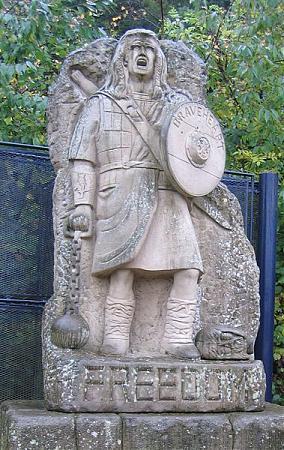
In 1997 he installed a new statue honoring William Wallace at the foot of Monument Hill, next to the car park. However, the hero's portrait seemed less historical than the original face of Mel Gibson, who had incarnated in the film Braveheart-term also appeared in the coat of the hero in the statue.
According to William Temby2 this caused the discontent of the Scots, and the mobilization of social groups who demanded its removal, it was denied, and since then the monument suffered recurring vandalism that marred especially the face of the statue. Hence, the statue had to be protected by bars, something surprising when you consider that the title of the statue was Libertad.3 Under Rampant Scotland Newsletter news when in September 2004 was completed within occupied space rental by the statue, the author put up for sale by auction with a starting price of £ 350,000, with no buyers.

Two English ex-soldiers are acussed to attack a mosque of England


Two British ex-soldiers appeared today before a judge accused of throwing firebombs on Sunday at a mosque in Grimsby, north-east of England, the BBC reported.
The Islamic Cultural Center attack in the town of 90,000 inhabitants, came four days after the murder of the soldier Lee Rigby in London at the hands of two suspected radical Islamists.
Stuart Harness, 33, and Gavin Humphries, 37, in custody accused of the charges of arson and endangering the lives of others.
The two former soldiers will return to appear in court in Grimsby on 7 June.
The head of the mosque, Diler Gharib, described the local newspaper "Grimsby Telegraph" how someone threw firebombs at the building where several people were gathered inside.
"We had finished our prayers and we were discussing how our neighbors to thank the support they have shown in recent days when we heard a bang and we saw fire coming under the door," said Gharib.
The attack on the mosque in the town was the second in a few days, after a group of eleven teenagers, aged 16 and 17, allegedly damaged the cars parked across the street from the day after the death of the soldier Rigby, who shocked the United Kingdom.
The Humberside County police reported that five of the eleven young men have been released without charge, while the rest have left the police station bail.

martes, 14 de mayo de 2013

The London Underground


The London Underground  is a public transportation electric railway that operates both above and below ground throughout the Greater London area. Is the transport system of this type world's oldest. Became operational on January 10, 1863 and its older sections have completed 150 years into operation in 2013.
Londoners often refer to him as "the Tube" because of the shape of their tunnels.
Today there are 274 stations open and more than 408 kilometers of active lines, with more than three million passengers use the metro daily. It is the second metro system in the world (after Shanghai) for miles and the first of the European Union.
Since 2003, the underground part of the organization Transport for London (TfL), which also manages London's buses, including the famous red double-decker buses. Previously London Regional Transport was the company that owns the London Underground.


jueves, 9 de mayo de 2013

The Beatles


The Beatles were an English rock band active during the 1960s, and recognized as the most commercially successful and critically acclaimed in the history of music popular.Formada in Liverpool, was established in 1962 by John Lennon (rhythm guitar, vocals) , Paul McCartney (bass, vocals), George Harrison (lead guitar, vocals) and Ringo Starr (drums, vocals). Rooted in skiffle and rock and roll of the fifties, the band later worked with different musical genres, ranging from pop ballads to psychedelic rock, often incorporating classical elements, among others, pioneered in his songs . The nature of their enormous popularity, which had first emerged in the fashion of the "Beatlemania", transformed while his compositions became more sophisticated. Came to be perceived as the embodiment of progressive ideals, seeing their influence extend into the social and cultural revolutions of the 1960s.
With initial training five components of Lennon, McCartney, Harrison, Stuart Sutcliffe (bass) and Pete Best (drums), the band built their reputation in Liverpool and Hamburg clubs over a three-year period from 1960 . Sutcliffe left the group in 1961, and Best was replaced by Starr the following year. Established as a professional group after Brian Epstein would offer to be your representative, and with their musical potential enhanced by the creativity of producer George Martin, achieved commercial success in the UK in late 1962 with their first single, "Love Me Do" . From there, they acquired international popularity over the following years, which made a large number of tours until 1966, when it ceased live activity to concentrate solely on the recording in the studio until its dissolution in 1970. Then all members embarked on successful independent careers. Lennon was assassinated outside his home in New York in 1980, and Harrison pass away of cancer in 2001. McCartney and Starr remain active.
During his years of study created some of his best material, including the album Sgt Pepper's Lonely Hearts Club Band (1967), considered by many to be a masterpiece. Four decades after their separation, they created music remains popular. They remain as the group with the most number one on the British charts, placing more albums in this position than any other musical group. According to RIAA certifications, they have sold more albums in the United States than any other artist. In 2008, Billboard magazine released a list of the most successful artists of all time on the Hot 100 on the occasion of the 50th anniversary of the charts, and The Beatles were placed at number one. They were awarded seven Grammy Awards, and received a total of fifteen Ivor Novello Awards from the British Academy of Songwriters, Composers and Authors. In 2004, Rolling Stone magazine ranked at number one on their list of the "100 Greatest Artists of All Time" According to the same publication, the Beatles' innovative music and cultural impact helped define the years sixty.
This link is a song of The Beatles:

domingo, 5 de mayo de 2013

William Shakespeare


William Shakespeare (April 26, 1564 - April 23, 1616) was a playwright, poet and English actor. Sometimes known as the Bard of Avon, Shakespeare is considered the greatest writer in the English language and one of the most famous in world literature.
The New Encyclopædia Britannica says that "many consider him the greatest playwright of all time. Their pieces are represented more often and in more nations than any other writer."
Shakespeare's works have been translated into the major languages ​​and his plays are still performed worldwide. In addition, many quotations and aphorisms of his works have become part of everyday use, both in English and in other languages. Over time, there has been much speculation about his life, questioning his sexuality, religious affiliation, and even the authorship of his works.

domingo, 28 de abril de 2013

Bronze Age


English society changed by the invention of bronze. Metal objects appeared in England as early as 2700 BC, although it is believed to have been imported.
About 2,000 BC bronze was created in England, comprising 9 parts of copper and tin. It is, of course, harder than stone and always more efficient as a tool and weapon.
In the Bronze Age the English rode horses and they were the first to weave cloth. The bronze age women, their hair adorned with pins and bone crescent and wore necklaces.
In the late Bronze Age (1000 BC-650 BC) built forts in the hills because wars were more common. This may have been because the population increased and fertile land were difficult to obtain.
Meanwhile, in the Bronze Age barrows are being built, although cremation was practiced. The dead were buried with useful items. It was believed that the need in the afterlife. Unfortunately, they had no written records, we know nothing of the religion of the Bronze Age.
We know that the British Bronze Age round living in wooden huts with thatched roofs, but nothing is known of their society and their organization. However, it is believed that there were different social classes.

martes, 23 de abril de 2013

Science in England


From England comes Prominent Figures of the Sphere of Science and Mathematics, as Isaac Newton, Michael Faraday, Robert Hooke, Robert Boyle, Joseph Priestley, JJ Thomson, Charles Babbage, Charles Darwin, Stephen Hawking, Christopher Wren, Alan Turing, Francis Crick, Joseph Lister, Tim Berners-Lee, Andrew Wiles and Richard Dawkins.
Some Experts Say That The First UN idea Metric WAS invented by John Wilkins, the first secretary of the Royal Society in 1668.
As the birthplace of the Industrial Revolution, England was home many Important Inventors version of the late 18th and Principles 19.
The British engineer Isambard Kingdom Brunel, WAS Known For The Creation of the Great Western Railway, a series Famous Steamboats, and numerous bridges Important release, revolutionized the Public Transportation and Engineering today.
Some of the Inventions and Discoveries made many English child portion: The First Industrial machine spinning, The First Team and the Modern Computer, the World Wide Web along with HTTP and HTML, The Results of the first blood transfusion, vacuuming, Lawn mower, Safety belt, the hovercraft, the electric motor, Microphone and steam engines.
Theories As Darwinian theory of evolution and atomic theory.
Newton WAS the enacting of universal gravitation and Newtonian mechanics, and infinitesimal calculus, WHILE That Robert Hooke Hooke's law enacting of Elasticity.
Other inventions were the railway board, heating, asphalt, rubber, the mousetrap, "cat's eye" road safety device, joint development of the light bulb, steam locomotives, the planter, and motor reaction many Modern Techniques and technologies used in precision engineering.

sábado, 20 de abril de 2013

The War of the Roses


The War of the Roses (1455-1485) was the set of conflicts intermittent civil war between the House of Lancaster wing against the House of York. Both royal families had a common origin in the Royal House of Plantagenet, as descendants of King Edward III. The name "War of the Roses" was not used at the time, but comes from the emblems of the two royal houses. On one side was the red rose of Lancaster and the white rose of another York, which were used as emblems in the war.
The war was mainly between members of the landed aristocracy and armies of feudal lords. Support for each of the sides depended largely dynastic marriages among the nobility. The patriarch of the house of Lancaster, John of Gaunt had the first title the Earl of Richmond, the same that would show Henry VII at the end of the war. The leader of the House of York was Edmund of Langley, who held the Lordship of Cambridge. Later, during the reigns of the Tudors and the Stuarts, Richmondshire and Cambridgeshire would become major foci of recusants and Puritans, respectively. Notably, the fight between factions continued beyond the time of Henry, as the monarchs that followed prompted clashes continued.
The War of the Roses, largely caused the fall of the Plantagenets, as it produced a high number of deaths among the nobility, and generate widespread social discontent. This period marked the decline of British influence in Europe, the weakening of the feudal power of the nobles and, in return, increased influence by traders, and the growth and strengthening of a centralized monarchy under the Tudors . This war marks the end of the English feudal era and the beginning of the Renaissance.
This last rose is the Tudor rose, created at the end of the civil war, uniting both emblems.

domingo, 14 de abril de 2013

Margaret Thatcher Dies at 87

London, England (09/ABR/2013.)
It was an admired woman in the world, but also hated. The former Conservative prime minister Margaret Thatcher, who transformed and divided with the same depth to his country, died

The so-called "Iron Lady" died "peacefully" at the Ritz hotel room in London, where he lived temporarily, his spokesman said Lord Tim Bell.
Worldwide leaders expressed dismay at the demise of the so far only head of the British Government.
In the UK, hundreds of people gathered in the city of Glasgow, Scotland, and in London's Brixton neighborhood to celebrate the death, as the economic policy of the premier hit with more taxes to the British.
Thatcher had a great friendship with Ronald Reagan, U.S. president of the time. The same happened with former Chilean dictator Augusto Pinochet, who also supported his campaign as she herself admitted in the late nineties.
The military supported the British premier in the war against Argentina over the Falklands dispute.
In Buenos Aires, the Government issued an official reaction, but citizens criticized on Twitter, blaming her for the death of 649 soldiers in the South Atlantic conflict.
Thatcher ordered the British landing in 1982 in the Falkland Islands, located about five thousand miles-UK military to evict the Argentines who had "occupied".
"She will always be remembered in the islands for his decision to send our forces who liberated Argentina home after the invasion in 1982".

in London as a result of a stroke at age 87.

viernes, 5 de abril de 2013

Rivers in England


The main rivers are Thames, Severn, the Trent and the Ouse.
The Thames is the principal river of England. It rises near Kemble and passes through the cities of Oxford, Wallingford, Reading, Henley-on-Thames, Marlow, Maidenhead, Eton, Windsor and London. Its length is 346 km and flows into the channel Mancha.Es a navigable river, connecting London with the sea on one side and the dense network of inland canals on the other. The most important is the Bristol Channel, which communicates with the River Severn. Its main tributaries are the rivers Churn, Leach, Cole, Coln, Windrush, Evenlode, Cherwell, Ock, Thame, Pang, Kennet, Loddon, Colne, Wey and Mole.
The River Severn is the longest river in the United Kingdom and. It has 354 km in length. The river rises near Plynlimon, and through towns like Shrewsbury, Worcester and Gloucester. It flows into the Atlantic Ocean forming an estuary in the Southwest. Its main tributary is the River Tern, but also his own tributaries the rivers Vyrnwy, Stour, Warwickshire Avon and Bristol Avon and Teme the left and the right Wye.
The River Trent has a length of 297 km. Born in Staffordshire between Biddulph and Mow Cop and flows into the North Sea in the Humber estuary, which it shares with the River Ouse. It falls on the estuary at Niagara Trent. It is a navigable river in the 188 km that between Burton and the mouth. Its main tributaries are the rivers Dove, Derwent, Erewash and Devon to the left, and Mease, Tame and Soar to the right. Traverses the cities of Stoke-on-Trent, Derby, Nottingham, Newark-on-Trent, Immingham and Hull.
The River Ouse has a length of 240 km. Born around the villages of Syresham and Sulgrave, in Northamptonshire. Traverses the cities of Brackley, Buckingham, Stony Stratford Milton Keynes, Newport Pagnell, Olney, Bedford, St Neots, Godmanchester, Huntingdon, St Ives, Littleport and Downham Market. Flows into the North Sea in the Humber estuary, which it shares with the River Trent. Its main tributaries are the Babingley, Gaywood, Ouzel or Lovat, Odell Rill, Kym, Ivel, Cam, Lark, Ouse and Wissey.

viernes, 29 de marzo de 2013

Lake District

The National Park Lake District covers the North West of England and was created in 1951 to protect the landscape against unwanted change that industry and trade could cause.

Almost all the land in the park is privately owned, with small areas belonging to the National Trust. Generally in England there is no restriction on the entry or movement within the park.
The highest mountains in England are within the park boundaries. It is considered an area of outstanding natural beauty with breathtaking scenery unique to this corner of England.
The farmland, hills and towns add aesthetic value to the landscape with an ecology modified by human influence for millennia, and hosting important wildlife habitats.
The Lake District is intimately associated with English literature of the eighteenth and nineteenth centuries. Thomas Gray was the first to bring attention to the region, when he wrote a journal of his Grand Tour in 1769, but it was William Wordsworth who wrote poems most famous and influential. Wordsworth's poem "I Wandered Lonely as a Cloud", inspired by the sight of daffodils on the shores of Ullswater, remains one of the most famous of the English language. The area was known as the Lake Poets.
During the twentieth century, the children's book author Beatrix Potter wrote many of her famous Peter Rabbit books in the Lake District from his home in Hill Top Farm.
This is a documentary of William Wordsworth and the Lake District:

jueves, 28 de marzo de 2013

Literature, poetry and philosophy in England


The period of Old English literature was always backed by the epic poem Beowulf, the secular prose of the Anglo-Saxon Chronicle is, along with Christian writings Judith, Caedmon's Hymn and hagiographies holy. After the Norman conquest Latin continued amongst the educated classes, as well as an Anglo-Norman literature. English literature emerged with Geoffrey Chaucer, author of The Canterbury Tales, along with Gower, the Pearl Poet and Langland. The Franciscans, William of Ockham and Roger Bacon were major philosophers of the Middle Ages and the other ages. Julian of Norwich it was with her Revelations of Divine. Love was a prominent Christian mystic. During the Renaissance, William Shakespeare was the great exponent, with works such as Hamlet, Romeo and Juliet, Macbeth and The Dream of a Summer Night, it remains one of the most championed authors in English literature. Marlowe, Spenser, Sydney, Thomas Kyd, John Donne, Jonson are other established authors of the Elizabethan age. Francis Bacon and Thomas Hobbes wrote on empiricism and materialism, including scientific method and social contract. Robert Filmer wrote about the divine right of kings. Andrew Marvell was the best known poet of the Community, while John Milton authored Paradise Lost during the Restoration it was.
Some of the most prominent philosophers of the Enlightenment were Locke, Paine, Johnson and Bentham. More radical elements were later countered by Edmund Burke who is regarded as the founder of conservatism. The poet Alexander Pope with his satirical verses, became well regarded. The English performance is a significant role in romanticism, Coleridge, Byron, Keats, Shelley, Shelley, Blake and Wordsworth were major figures. In response to the Industrial Revolution, the writers seemed to find a way between liberty and tradition; Cobbett, Chesterton and Belloc were main exponents Penty and cooperative movement advocate Cole. Empiricism continued through Mill and Russell, while Williams was involved in the analysis. The authors of the era of the Victorian era include Dickens, the Brontë sisters, Jane Austen, Eliot, Kipling, Hardy, H. G. Wells, Lewis Carroll and Evelyn Underhill. Since then England continued to produce novelists such as C. S. Lewis, Orwell, D. H. Lawrence, Virginia Woolf, Enid Blyton, Huxley, Christie, Pratchett, J. R. R. Tolkien, and J. K. Rowling.

sábado, 16 de marzo de 2013

Thirteen bodies are discovered at the time of the Black Death


Excavations of a rail project have enabled the discovery in London of thirteen bodies and remains of pottery dating from the mid-fourteenth century and which seem to belong to the time of the Black Death. It was already known that in that area there was a cemetery but its exact location was a mystery.
The skeletons were found in Charterhouse Square Square, along with ceramic mid-fourteenth century, during excavations as part of the Crossrail project, the new line of high-speed subway linking the districts of East and West London.
DNA tests to be conducted on human remains could provide valuable information about the development of the bacteria that caused the Black Death call or Black Death, the most devastating plague in human history that affected Europe in the nineteenth XIV and peaked between 1347 and 1353.
During the excavation works teams have discovered skeletons near London's Liverpool Street (north of town), remains of the Bronze Age and the largest piece of amber found in the UK.
"We have found archaeological remains practically all periods, from prehistory to the twentieth century, but this location is probably the most important medieval site of those found," said Jay Carver, the rail project archaeologist.
The bodies were distributed in two rows, before the black plague became epidemic causing mass graves. Archaeologists working on the Crossrail project and others from the Museum of London will continue digging to discover more remains or other findings.
The Crossrail project is presented as the most ambitious in Europe and also includes the construction of two large tunnels 30 meters below the surface. If all goes as planned, the project of uniting over 118 km the towns of Maidenhead, west of London, in the county of Berkshire, with Shenfield (Essex), to the east, will be completed in 2017 . The Crossrail will operate up to 24 trains at peak times, each traveling at speeds up to 160 km / h.

miércoles, 13 de marzo de 2013

A Van Dyck is discovered stored in an English museum


A passionate British art has identified a valuable online see Van Dyck was stored for years in an English museum because they thought it was a copy.
The art historian Bendor Grosvenor authorship certified female portrait, 72 by 61 inches, after seeing it on the website "Your paintings" enabled by public broadcaster BBC to catalog all the oils in the hands of public institutions in the UK.
A Grosvenor not had no doubt that the portrait of Olivia Boteler Porter, bridesmaid Henrietta Maria, wife of King Charles I, was the Flemish painter Anthony Van Dyck, who worked at the court of the monarch.
The work, in the 1630s, remained for years forgotten and dusty Bowes Museum in County Durham English because it was believed to be a copy.
Grosvenor has valued the portrait, which will continue in public hands, around one million pounds (1.1 million euros or 1.5 million), compared to the four or five thousand pounds (four thousand to five thousand 588 euros or 735 995 five thousand to seven thousand 493 U.S. dollars) worth is estimated as the alleged copy.
The picture identification process detailed in the BBC program "Culture Show", which will air today and the Bowes Museum director, Adrian Jenkins, thanks Grosvenor to have increased the pedigree of his collection.

martes, 12 de marzo de 2013

A Incredible Treasure


Terry Herbert, an amateur search for objects with metal detector, never imagined that his hobby would take to the pages of the newspapers. However, last July Herbert discovered on the farm of some friends in Burntwood (Staffordshire, UK) which is considered as the largest Anglo-Saxon treasure discovered so far. According to experts, the pieces discovered (more than 1,500 gold and silver) are older than about 1,300 years, and are delicately worked. The beautiful jewelry totaling five gold and 1.3 kilograms of silver.
"The quantity of gold is amazing but, more importantly, the quality of craftsmanship is really high," said Kevin Leahym, Portable Antiquities Scheme member, a group that records archaeological finds made ​​by 'treasure hunters' amateurs in UK. It was not the only expert in making statements about the importance of this discovery. In the words of Leslie Webster, a researcher at the British Museum, "[the discovery] is going to alter our perceptions of Anglo-Saxon England in the seventh century and early VIII as radically, if not more, as the Sutton Hoo discoveries in 1939; force archaeologists and art historians to rethink the chronology of the manuscripts and metalwork.


miércoles, 6 de marzo de 2013

Leadenhall Market


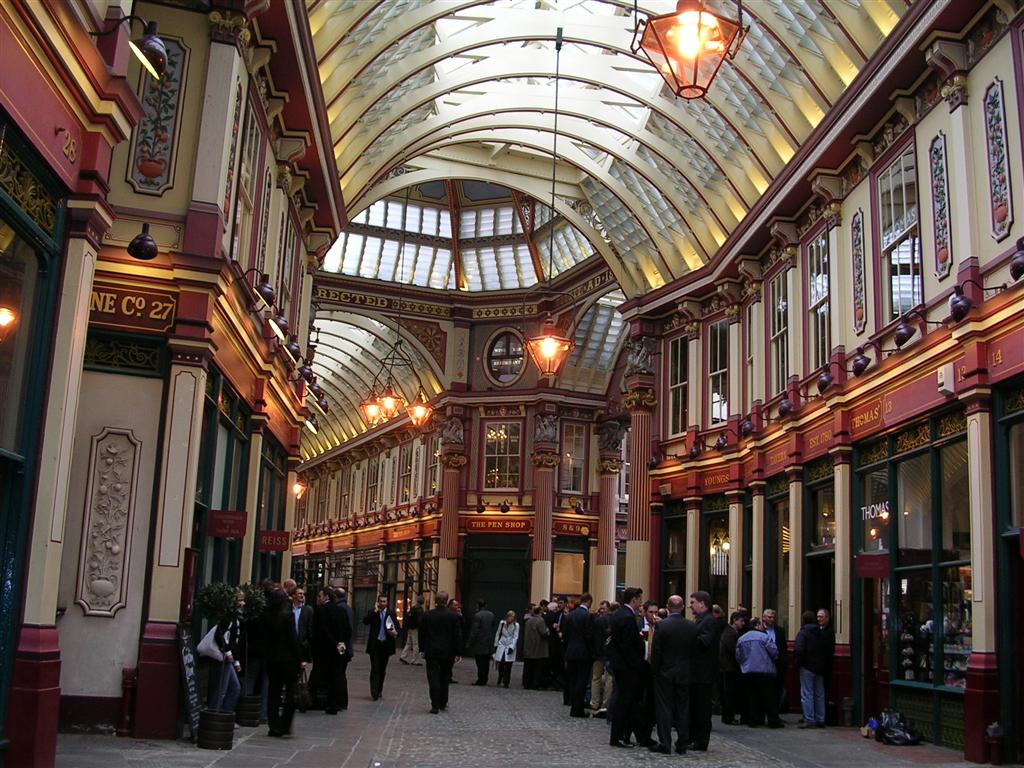
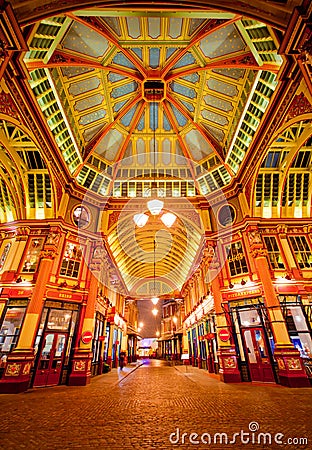
This market is located in the epicenter of London's financial district just steps from the subway station Bank. The environment is certainly attractive, the floor is made of cobblestones, the area is covered by a glass roof and wrought iron along with the decor of the shops and pubs of the street give an air of another time. In fact the outdoor market have been used in various films like Harry Potter and the Sorcerer's Stone.
The market dates back to the 14th century although the current design, really spectacular, dating from 1881. It sold, chiefly, fresh foods, such as meats and cheeses, but there are florists, cafes and pubs.

martes, 19 de febrero de 2013

The celts


Origin

The most accepted theory of the origin of the Celts, is the "Indo-European". From India and the Middle East, migrated to Europe. However, some studies suggest other possible different origins of the Celtic people.

Celtic culture

Celtic culture comprises orally transmitted traditions, highlighting the stories included in the Ulster Cycle.
The dress of the Celts, as has been rebuilt, shows a colorful style and well decorated, with great tendency to mix bold colors. The main dyes that caused so fervently surely were: for red, the "Red" for Reseda luteola yellow and blue, pastel grass. The linen fabric was the oldest found, used by proto-Celts. The wool became the main raw material used once the sheep were domesticated. In the Iron Age most clothing was made of wool Celts. The fabric was woven with looms, plaid and stripes. The pieces were braccae basic dress for men and long gowns for women peplum and a bag on the belt for both.
The houses were made of armor studs, intertwined branches and twigs and mud, straw cubiertasd of entramdos. Holes distributed around the house, were used to store grain. The homes were within fortified hill, as in the case of Maiden, in Dorset.

Religion


The religion of the ancient Celts, particularly that of the Gauls before the Roman conquest, is not well known, and the data they have to rebuild it are scarce and not very accurate.
The cult was in charge of the "Druids", priests who were both educators of youth. The monuments called "Druid Stone", before the arrival of the Celts west of Europe, seem to have shown no role in the religion of the ancient Gauls.
For a long time there were only local cults especially related to mountains, forests and waters, who was invoked under different names.
The Gauls were too abstract deities or spirits of the cities.
Among the practices of popular belief is famous collection, according to fixed prescriptions, mistletoe, which is endowed with extraordinary virtues considered. Also, the oak was considered a sacred tree.

lunes, 11 de febrero de 2013

New's Wembley Stadium(2007-2013)

The Wembley Stadium is a football stadium that is located on the former site of the stadium with the same name. The Old Wembley Stadium was the most famous of all England and one of the best known worldwide. The new Wembley stadium is the local football team England.
After the demolition in 2002 of the old Wembley and the design of architect Norman Foster opened the door to a new Superestadio with a capacity of 90,000 spectators, which was completed in 2007. The project cost was around 757 million pounds (1.097 billion euros).
The stadium is connected to the metro stations of Wembley Park and Wembley Central via "White Horse Bridge".
The construction of the new Wembley was part of the project for the London 2012 Olympics, which hosted football matches both male and female and both finals.
It was expected that the national stadium was inaugurated on 13 May 2006 with the end of the FA Cup, but due to problems with the construction companies and WNSL Multiprex, set a new deadline for September 2006, with the first match qualification for Euro 2008, which was to face England against Andorra. However, again it had to delay the opening until 2007.On March 24 of that year the stadium was finally opened inmatch between the U-21 England and Italy
The stadium holds the match for the final of the FA Cup, the Community Shield and Carling Cup and the matches of the England football team.
On May 28, 2011 hosted the final of the Champions League between FC Barcelona and Manchester United, the first being winning by 3 goals to 1. In June 2011 the UEFA appointed Wembley again host the final of the Champions League in 2013, on the anniversary of the Football Association.
On August 11, 2012, the court Wembley hosted the game for the gold medal in the 2012 Olympic Games, held between teams from Brazil and Mexico, which was won by the Aztec squad by a score of two goals one.
He has received the first NFL game outside of the Americas in 2007, within the series of events called "NFL International Series", in a regular season game between the Miami Dolphins (which made local computer), and the New York Giants, who months later would proclaim champions of Super Bowl XLII.
On October 26, 2008, due to the success of the previous year, returned to play another regular season game, in this case pitting the New Orleans Saints (at home) against the San Diego Chargers.
Repeated in 2009, also facing regular season game to the Tampa Bay Buccaneers (at home) and New England Patriots (as visitors).
In 2010 they played the match between Denver Broncos and San Francisco 49ers San Francisco 49ers where imposed by a score of 24-16.